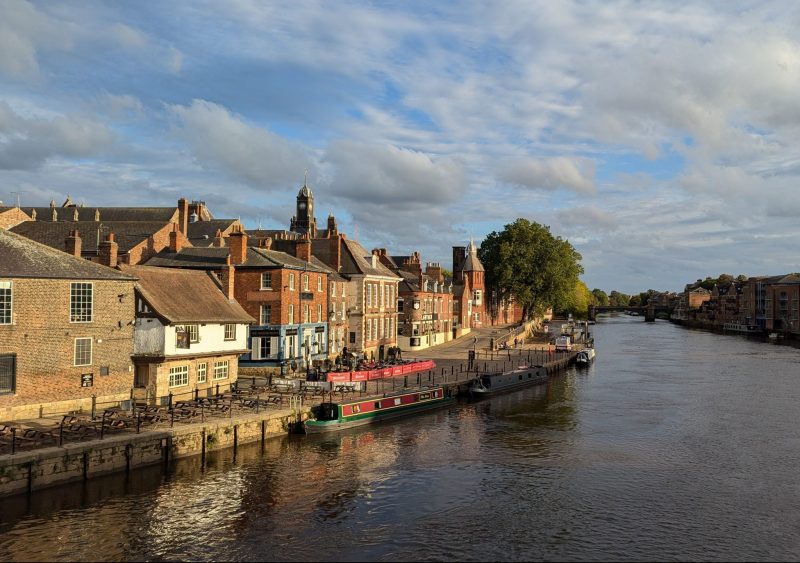
York knows how to make an impression.
The city has the kind of streets people remember. Ancient walls, independent shops, small cafés tucked into historic corners, riverside walks, museums, theatres, pubs, restaurants, guesthouses, hotels and event spaces that all become part of a visitor’s story. People may come for the Minster, the Shambles or a weekend away, but their experience is shaped just as much by the places they eat, shop, stay, queue, shelter from rain and ask for directions.
That is where local businesses matter.
If you run a visitor-facing premises in York, you are not just selling coffee, rooms, tickets, gifts, meals or experiences. You are helping shape how people feel about the city. Visit York describes the city as a place where ancient walls surround local businesses, attractions, shops, accommodation, eateries, events and festivals, which captures the point rather neatly: the visitor economy is built from many small moments, not one single attraction.
A smooth welcome, a warm room, a clear route to the toilets, a dry entrance, a calm check-in, a staff member who is easy to find. These details may not end up in a glossy travel guide, but guests notice them.
And when they are missing, they notice even more.
Creating a better guest experience is not only about decoration, menus, booking systems or customer service scripts. It is about the whole environment. The visible parts and the parts visitors never see. Comfort, safety, sustainability, staff flow, weather readiness and the quiet operational care behind a good visit.
In a city as loved and as busy as York, that matters.
Understand the journey your visitors actually take
The best way to improve a guest experience is to walk through it yourself.
Not as the owner. Not as the manager who already knows where everything is. As someone arriving for the first time, possibly with bags, a pushchair, a wet coat, a booking confirmation on a phone with low battery, or a group of friends who all want different things.
Where does the visit begin? Is the entrance obvious from the street? Can people tell where to queue? Does the doorway get cramped at busy times? If someone arrives early, do they know where to wait? If it is raining, are they standing under a leaky canopy or blocking the door while trying to fold an umbrella?
Small questions. Big difference.
A boutique hotel near the city walls may need to think about luggage, check-in timing, key collection and late arrivals. A café near a busy shopping route may need to manage queues without making people feel rushed. An independent shop may have narrow aisles, delicate stock and visitors browsing with backpacks. A small attraction may need to handle school groups, older visitors, wet coats, pushchairs and people who need somewhere to sit for a moment.
Your visitor journey is not a neat line. It is a series of tiny moments.
Look at lighting, signs, doors, steps, seating, payment points, toilets, staff visibility and the route out. Listen to the questions visitors ask repeatedly. “Where do I go?” “Can I leave this here?” “Is there a toilet?” “Do I pay now?” “Can we sit outside?” Those questions are clues. They tell you where the experience is not quite doing enough on its own.
Good design does not always call attention to itself. It simply removes friction.
Make comfort, safety and flow feel effortless
Guests rarely compliment a venue because the temperature is just right, the lighting feels comfortable, the queue moves smoothly and staff-only areas are clearly managed.
They simply relax.
That is the point. The best operational work often disappears into the background. A visitor should not have to think about whether a space is safe, whether the door they are about to open is private, whether the lighting is too harsh, or whether staff seem overwhelmed by the layout of their own premises.
For York businesses, this can be delicate. Many visitor-facing spaces are characterful rather than straightforward. Historic buildings, narrow staircases, small rooms, courtyards, cellars, awkward corners, listed features and old walls that were never designed for modern footfall. You may not be able to make every space behave like a new-build hotel lobby. Nor should you want to. Character is part of the appeal.
But character should not become confusion.
Think about how people move when you are busy. Do diners cross paths with staff carrying trays? Do hotel guests pass back-of-house doors without knowing where to go? Does an event queue block other visitors? Are delivery routes clashing with public areas? Is there a difference between a cosy space and a cramped one?
Behind the scenes, systems can help. smart building technology is one example of how modern premises can connect energy management, security and automation, with MJ Flood Security operating in this field. For a visitor-facing business, the wider idea is simple: when lighting, access, safety and building systems are easier to manage, staff have more space to focus on guests.
Technology should not replace hospitality. It should support it.
A smoother building helps your team work more calmly. A calmer team improves the guest experience. The visitor may never know why the room feels comfortable, why entry is controlled without fuss, or why staff seem confident during a busy spell. They will simply feel that the place works.
Think about sustainability as part of the welcome
Sustainability is often discussed as if it sits outside the guest experience.
It does not.
A venue that wastes energy, struggles with water, overheats in summer, leaks during heavy rain or treats outdoor areas as an afterthought will eventually show those weaknesses to visitors. Maybe not every day. But on busy weekends, during bad weather or in peak season, the building tells the truth.
York’s wider tourism ambitions already point in this direction. York’s tourism strategy describes a regenerative visitor economy and presents tourism as something that should contribute positively to York’s prosperity, wellbeing and long-term future. York St John University’s summary of the strategy also highlights “Green York”, where businesses and visitors contribute to York’s transition to net zero carbon emissions by 2030.
That is not just high-level language for policy documents. It has practical meaning for the people running venues.
If you manage a café, hotel, attraction, pub, shop or event space, sustainability can show up in ordinary choices. Better lighting. Less wasted heat. Sensible waste systems. Clear maintenance routines. Durable materials. Outdoor spaces that can handle real weather. Roofs, drains and courtyards that do not become someone else’s problem when the rain arrives.
Water management is especially easy to overlook until something goes wrong. A blocked drain near an entrance, water pooling in a courtyard, an outdoor seating area that becomes unusable after rain, damp appearing in a storage space. None of this feels like “guest experience” until it affects the guest.
For larger venues, mixed-use properties or development projects, specialist infrastructure thinking may be needed. CapCon Engineering sustainable rainwater management specialists is one example of a company working in the design and installation of siphonic and gravity rainwater drainage systems for high-tech and large-scale construction. For local business owners, the broader lesson is that sustainability is not only about what visitors see. It is also about how well the premises stands up to use, weather and time.
A sustainable welcome is not preachy. It is thoughtful. It says: this place has been cared for properly.
Prepare for busy seasons without losing the personal touch
York has rhythms.
Weekends feel different from weekdays. School holidays change the pace. Race days, festivals, theatre evenings, Christmas shopping, half-term breaks and sunny Saturdays by the river all bring their own pressure. Then there are the sudden changes: rain when everyone expected sunshine, a delayed group booking, a staff absence, a queue that forms ten minutes earlier than usual.
Busy periods can be good news. They are also when weak systems show.
A restaurant that feels charming at 6pm can feel chaotic by 8pm if booking gaps are too tight. A shop that works beautifully on a quiet morning may become difficult to browse when visitors are carrying bags and coats. A guesthouse check-in can feel personal until three parties arrive at once and nobody knows where to stand. An attraction can feel welcoming until the toilets, cloakroom or exit route become bottlenecks.
Preparation should not make the experience feel rigid. That is the trick.
Visitors still want warmth. They want to feel looked after, not processed. The aim is to build enough structure behind the scenes so the front-of-house experience remains human. That might mean clearer arrival information, better queue planning, a pre-opening walk-through, extra checks on toilets and bins, more thoughtful staff positioning, or a short post-event review after especially busy days.
Ask your team where pressure builds first. They know. It might be the card machine area, the cloakroom, the narrow hallway, the outside tables, the lift, the till, the back door or the place everyone leaves wet umbrellas. Fixing that one pinch point may do more for the guest experience than a new sign, a new campaign or a new seasonal menu.
York gives visitors plenty to choose from, from historic attractions and theatres to restaurants, shopping and festivals. Best Things To Do In York’s own guide to the best things to do in York shows how varied the city’s visitor offer is, which is exactly why individual venues need to make their own experience feel smooth, welcoming and memorable.
The personal touch survives busy periods when staff are not constantly firefighting.
Protect the character that makes York businesses memorable
York businesses have an advantage many places would love to have: character.
Old beams, uneven floors, tucked-away rooms, independent shopfronts, cosy corners, courtyard tables, historic views, handwritten menus, local makers, family-run guesthouses and pubs with stories in the walls. These are not flaws to be polished out. They are often the reason people choose one place over another.
Still, character needs care.
A dimly lit corner can be atmospheric, or it can be unsafe. A small dining room can feel intimate, or it can feel cramped. A heritage building can feel authentic, or it can feel neglected. A quirky layout can charm visitors, or confuse them. The difference usually comes down to how well the business manages the experience around those features.
Do not modernise the soul out of your venue. But do not use character as an excuse for avoidable friction either.
A guesthouse can make check-in smoother without losing warmth. A shop can improve layout without becoming bland. A café can manage queues without feeling corporate. An event venue can review guest flow without making every arrival feel controlled. A restaurant can make back-of-house routines more efficient so staff have more attention for diners.
This is where good operations protect personality. They do not replace it.
The businesses visitors remember are often the ones that feel both distinctive and easy to enjoy. You can sense the care. The place has its own identity, but it also works. You do not have to fight the building to enjoy the experience.
That balance is powerful, especially in a city where visitors have plenty of choice.
Create a practical improvement plan for your venue
You do not need to change everything at once.
Start with a walk-through. Arrive as if you have never been there before. Stand outside. Find the entrance. Check the signs. Open the door. Follow the visitor route. Sit where guests sit. Visit the toilets. Look at the lighting. Watch where people hesitate. Notice where staff have to squeeze past each other. Step outside again and think about what happens in bad weather.
Then ask your team. Where do guests get confused? What do they complain about quietly? What breaks the flow on busy days? Which area looks fine to managers but causes problems for the people working there? Staff feedback can be blunt. Good. You need that.
Next, divide improvements into three groups.
First, quick fixes: clearer signs, better mats, adjusted lighting, tidier waiting areas, staff briefings, improved arrival messages, small maintenance jobs. Second, planned improvements: layout changes, better booking flow, external repairs, sustainability upgrades, accessibility reviews, system improvements. Third, bigger strategic decisions: refurbishment, expansion, infrastructure, guest technology or long-term premises investment.
Keep it grounded. A better guest experience is not built from buzzwords. It is built from the practical things people feel as they move through a space: welcome, comfort, clarity, safety, warmth, reliability and a sense that someone has thought about the visit before they arrived.
That is what York does well at its best.
The city gives visitors history, atmosphere, food, culture, shopping, festivals and memorable places to stay. Local businesses add the everyday magic: the helpful welcome, the dry seat, the calm check-in, the well-lit hallway, the smooth queue, the comfortable room, the courtyard that still works after rain.
So look behind the scenes. Improve the details. Protect the character. Build sustainability into the fabric of the experience.
A great visit is rarely accidental. It is designed, maintained and cared for, one small decision at a time.